Cut Cycle Time in Legal Ops: 5 Pilot Contract Management Best Practices
TL;DR:
Centralizing all contracts in a searchable repository with enforced metadata reduces data staleness and improves retrieval efficiency.
Assigning clear ownership using a RACI model and automating approval workflows significantly reduces delays and stalls in contract processes.
Tracking obligations, milestones, and renewals with well-configured alerts ensures proactive management and prevents missed deadlines.
Starting with high-volume, low-risk templates like NDAs and standard T&Cs allows quick wins and builds stakeholder confidence before expanding automation efforts.
Regular post-signature reviews and assigning specific contract owners help prevent value leakage and ensure ongoing compliance and performance management.
Table of Contents
Contract Management Best Practices Ranked by Impact
Not every fix carries the same weight. Some changes save minutes; others save your legal team from a six-figure renewal mistake. The nine practices below are ordered by how much operational drag they remove, with a metric attached to each so you can tell whether it's actually working.
1. Centralize contracts in one searchable repository
Scattered PDFs in shared drives and inboxes are the single biggest reason contract data goes stale. A centralized repository with enforced metadata (party names, effective dates, renewal terms, contract value, owner) turns a filing cabinet into a searchable asset. Metric to watch: completeness of contract metadata fields in the repository.
2. Standardize templates and clause libraries
Every custom-drafted NDA or services agreement adds review time and legal risk. A clause library with pre-approved fallback language cuts drafting time and gives negotiators a faster path to "yes." Metric to watch: share of contracts using pre-approved templates instead of ad hoc drafts.
3. Assign clear roles with a RACI model
Ambiguous ownership is why contracts get "file-and-forget" treatment after signature. Map who is Responsible, Accountable, Consulted, and Informed at each lifecycle stage, plus who owns escalation when a threshold is breached. The UK government's own contract management playbook treats this kind of governance and accountability structure as a prerequisite for delivery, not an afterthought. Metric to watch: portion of contracts assigned a clear, current owner.
4. Automate intake and approval routing
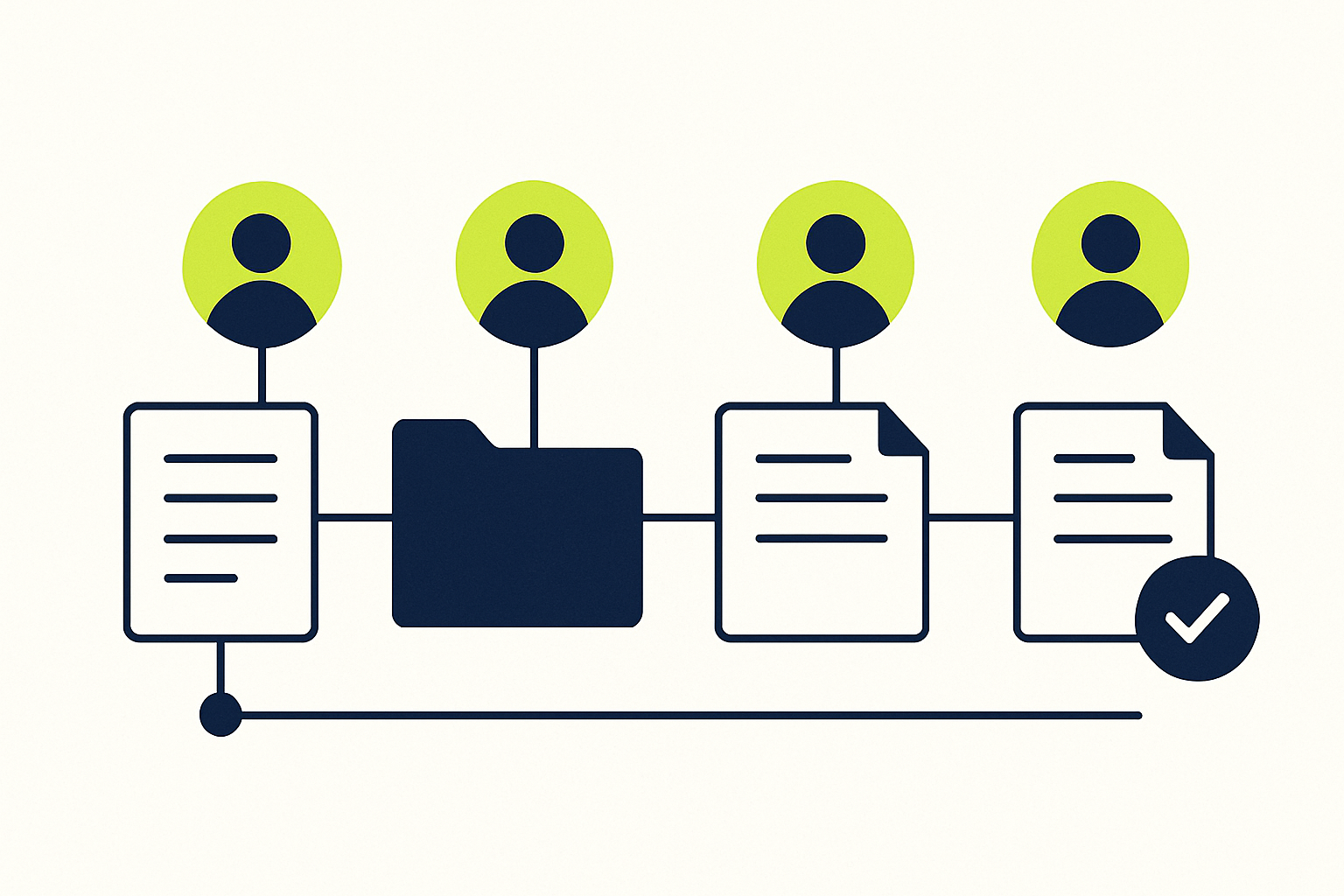
Manual handoffs between requester, legal, finance, and signatory are where contracts stall for weeks. Automated routing based on contract type and value moves the right approval to the right person without someone chasing an email thread. Metric to watch: average time to approval by contract category.
5. Track obligations, milestones, and renewals with alerts
Effective contract management means calendaring the dates that matter, not just the expiration date. That includes performance milestones and option elections buried in long-term agreements, according to Thomson Reuters' guidance on effective contract management. Alerts should fire well ahead of a renewal window, not on the day it closes. Metric to watch: count of renewal alerts provided well in advance of deadlines.
6. Use e-signature with single-source version control
Lost copies and "which version is final" confusion are avoidable. E-signature platforms paired with one authoritative source of truth eliminate the version-sprawl problem that plagues email-based negotiation. Metric to watch: incidence of multiple conflicting final contract versions.
7. Define and monitor core KPIs
You cannot improve what you don't measure. Cycle time, renewal accuracy, and metadata completeness are the three numbers that tell you whether your process is actually working or just busier. Metric to watch: trends in contract cycle time measured regularly over multiple periods.
8. Start with low-hanging fruit: NDAs and standard T&Cs
Don't try to automate your most complex master service agreements first. Thomson Reuters recommends prioritizing your most-used templates such as NDAs and standard terms and conditions, because they generate quick wins that build stakeholder buy-in for the harder rollouts later. Metric to watch: reduction in signature time for pilot contract templates.
9. Schedule regular post-signature reviews
A signed contract isn't a finished task. It's an ongoing obligation. Quarterly portfolio health checks and supplier performance reviews catch problems before they become renewal surprises. Metric to watch: share of active contracts that underwent recent periodic review.
Pro Tip: Don't build your clause library from scratch. Pull your five most-negotiated fallback clauses from last year's closed deals. That's your starting library, and it's already been tested in real negotiations.
How to Roll Out Contract Lifecycle Management Without Stalling
A phased rollout beats a big-bang launch every time. Rushing a full contract lifecycle management deployment across every department invites the kind of resistance that kills adoption before it starts.
Assess first. Map your current process end to end and capture actual cycle times, not estimated ones. You need a baseline before you can prove improvement.
Pick 2 to 3 pilot templates. Choose high-volume, low-risk agreement types (NDAs are the classic choice) and define success metrics before you start, not after.
Most legal teams don't have spare headcount to run a pilot on top of day-to-day work, which is where the rollout usually stalls. Oyster Shield addresses that gap with Forward Deployed Lawyers: experienced counsel embedded directly inside the legal team for the length of the rollout, mapping the current process, standing up the RACI model, and running the pilot templates through to measurable results before handing a working system back to the in-house team.
Building Governance That Removes Bottlenecks
Contracts stall when nobody's sure who signs off. A working RACI model assigns accountability by contract type. Routine renewals might sit with a contract manager. Anything over a defined dollar threshold escalates to legal or finance leadership automatically, not by someone remembering to ask.
Map delegated signing authority by contract value and risk category.
Build an approval matrix that names the exact threshold triggering each escalation tier.
Document the RACI for each contract type: NDA, MSA, vendor agreement, employment contract.
Invest in a written contract management plan that ties governance to business strategy, not just process compliance.
Training matters as much as the documentation. A playbook nobody's read is just a PDF. Walk new hires and cross-functional stakeholders through the escalation paths before they need them under deadline pressure.
Keeping Contracts Managed After Signature
The post-signature phase is where most value leaks out of a contract portfolio. A signed agreement with no assigned owner and no reminder schedule is functionally the same as a contract nobody signed.
Assign a named owner to every active contract, not a department or a shared inbox.
Set automated reminders at multiple lead times (90, 60, and 30 days) ahead of renewal, not just on the expiration date.
Run quarterly portfolio health checks across your full contract set, not just the ones about to expire.
Capture documented evidence of supplier or counterparty performance to inform the renew-or-terminate decision.
Pro Tip: If a contract has changed hands three times without a formal amendment on file, that's your signal to run an unscheduled compliance check. Undocumented changes are where audit findings come from.
A Quick-Start Checklist Backed by Real Implementation Data
You don't need a full enterprise rollout to start seeing results. A focused starter kit gets a pilot running in weeks, not quarters.
An intake form capturing requester, contract type, and counterparty details up front, which reduces the metadata gaps legal teams otherwise chase down manually.
One standardized NDA template and one standard terms-and-conditions template, ready to deploy first.
A starter clause library covering your five most common fallback positions.
Mandatory obligation fields: renewal date, notice period, contract value, named owner.
A reporting dashboard tracking cycle time and metadata completeness from day one.
Target realistic pilot metrics: a measurable reduction in time-to-signature on your pilot template category, high metadata completeness across new intakes, and fewer manual document reviews. AI-assisted document analysis speeds up the part that used to take longest: spotting clause variance and hidden obligations buried in older agreements, which is exactly the kind of readiness work SaaS companies need before diligence or an investor call.
Why Most Contract Failures Start With Filing, Not Drafting
The biggest shift in this list isn't any single tactic. It's moving from filing contracts to managing them as living assets with owners, deadlines, and performance data attached.
Three traps show up in nearly every legal operations team I've studied: file-and-forget storage where nobody revisits a signed agreement until it's already expired, missing metadata that makes contracts unsearchable when a deal needs fast answers, and unclear ownership that leaves renewal decisions to whoever notices first. Each one has a straightforward fix. Assign an owner at signature, not after a renewal deadline is missed. Enforce metadata fields at intake, not retroactively. Review the portfolio on a schedule, not in reaction to a crisis.
Tools like Dilicheck exist precisely because manual tracking breaks down at scale. But the discipline has to come first. The software just makes the discipline sustainable.
— Matias
This article is general information, not a substitute for advice from a qualified lawyer. Consult a qualified legal professional about your own circumstances before acting on anything here.
Put These Practices Into a Working System
Reading a checklist is one thing. Running it across hundreds of live contracts without a dedicated system is where most legal teams fall behind. Dilicheck was built to close that exact gap: instead of a repository, a clause tracker, and a separate obligation calendar living in three different tools, everything sits in one platform built for legal operations teams managing real contract volume.
An AI-powered contract management platform centralizes your agreements, flags clause variance and hidden obligations automatically, and tracks renewals with configurable alerts, so nothing depends on someone remembering to check a spreadsheet. For teams also preparing for fundraising, M&A, or ongoing compliance work, that same centralized data doubles as your audit trail. Start with the SaaS due diligence readiness checklist to see where your current contract practices stand, or explore the full Dilicheck platform to request a demo and see your own contract portfolio mapped against these best practices.
Sources
FAQ
What is the best practice for contract management?
Centralizing contracts in a searchable repository with enforced metadata is the foundational best practice, since it makes every other improvement (tracking, reporting, automation) possible.
What are the six stages of contract management?
Common frameworks describe stages including initiation, drafting, negotiation, execution, performance and obligation tracking, and renewal or termination, though the exact count varies by organization and framework used.
What are effective contract management strategies?
The most effective strategies combine standardized templates, clear RACI-based ownership, automated approval routing, and consistent KPI tracking, paired with a platform like Dilicheck that centralizes documents and surfaces obligations automatically.
What are the four components of contract management?
Most models point to repository and storage, drafting and negotiation tools, obligation and renewal tracking, and reporting and compliance monitoring as the four operational pillars.
How do I improve contract compliance?
Improving compliance starts with standardized clause libraries and approval matrices tied to risk thresholds, then requires ongoing monitoring through quarterly portfolio reviews and documented supplier performance checks.
Recommended
Ready to automate your due diligence?
Get a free healthcheck of your company's audit readiness. No credit card required.
Related articles
Avoid the 72 Hour Breach Trap in Data Processing Agreements
A practical guide to data processing agreements: what GDPR Article 28 requires, how to structure and negotiate a DPA, where compliance programs actually break down after signing, and the Article 27 representative requirement that catches non-EU/UK companies off guard.
Roll Out Private Equity Legal Operations and Cut DDQ Time
Legal operations creates value across the whole private equity ownership lifecycle — acquisition, first 100 days, hold period, bolt-ons and exit — not just at the diligence stage. This guide covers continuous legal readiness, the people-process-technology-accountability framework, portfolio legal health baselines with permissioned reporting, contract intelligence beyond renewal dates, and legal resource management beyond invoice review.
AI Contract Review: Audit Ready Results and a Buyer's Checklist
A buyer's guide to AI contract review: how the technology actually works, the features that matter, a vendor evaluation checklist, common red flags, and where Dilicheck fits.